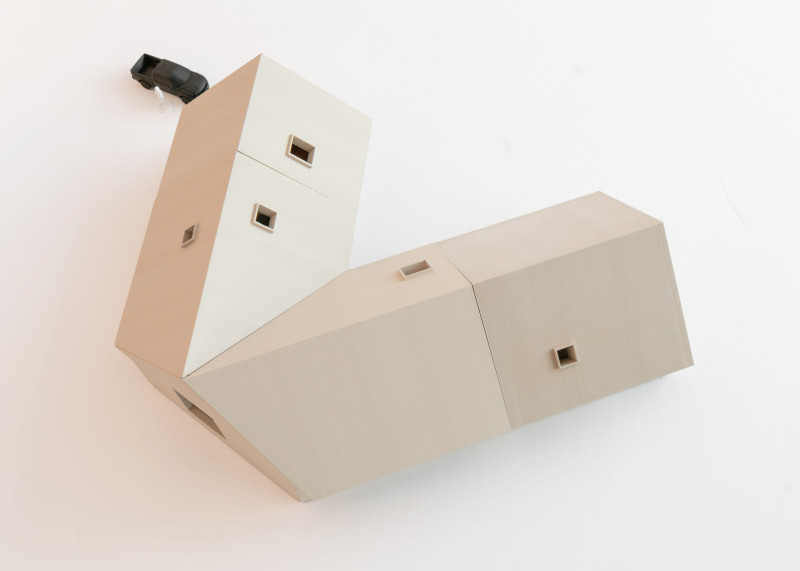
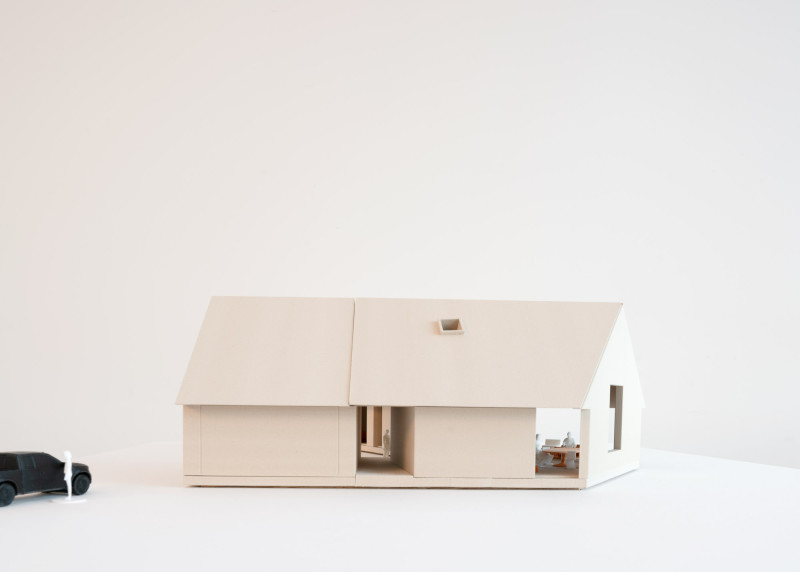
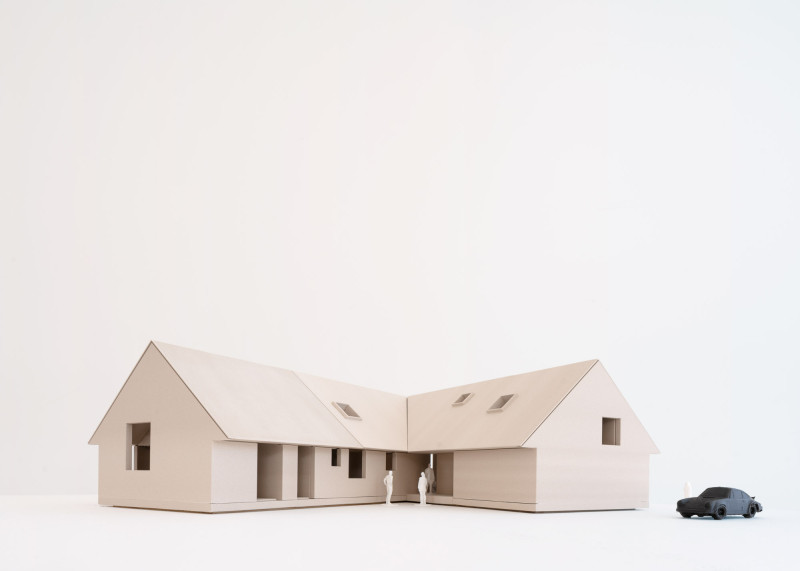
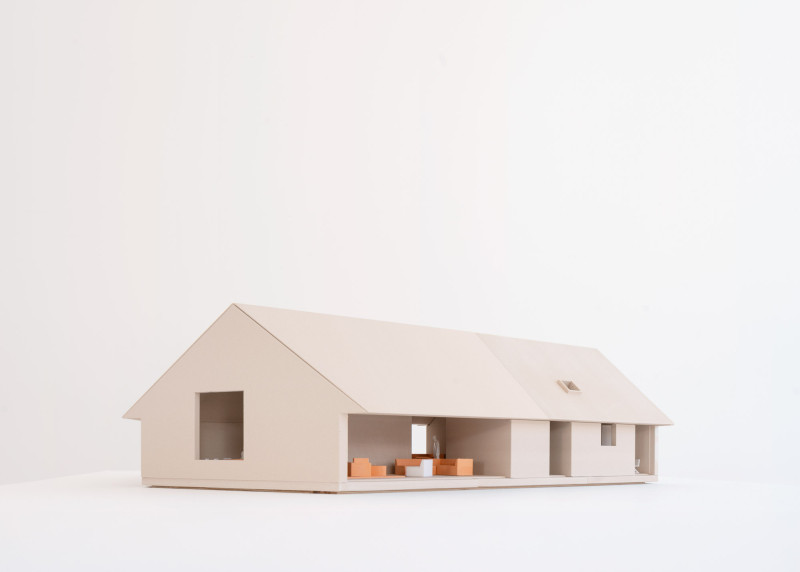
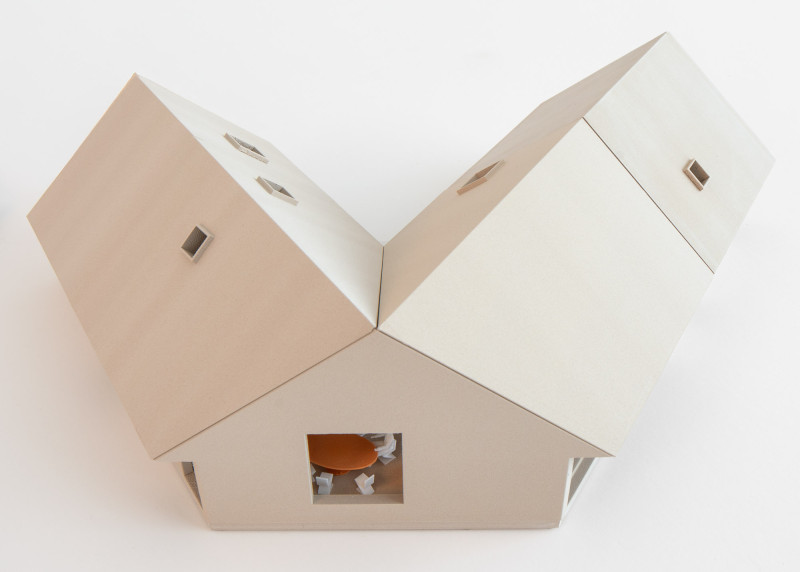
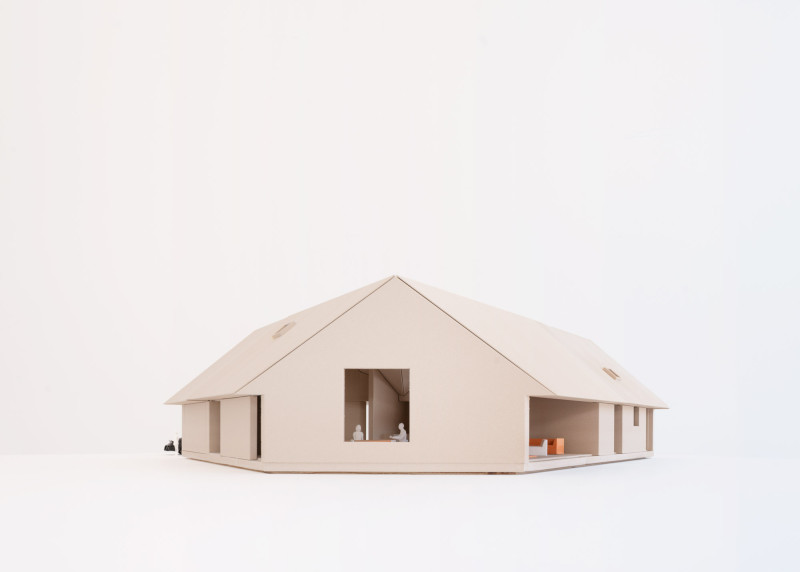
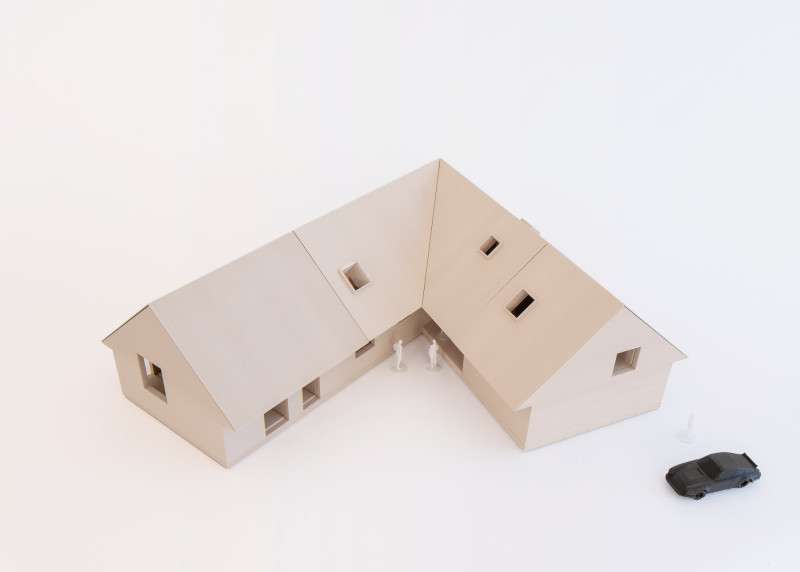
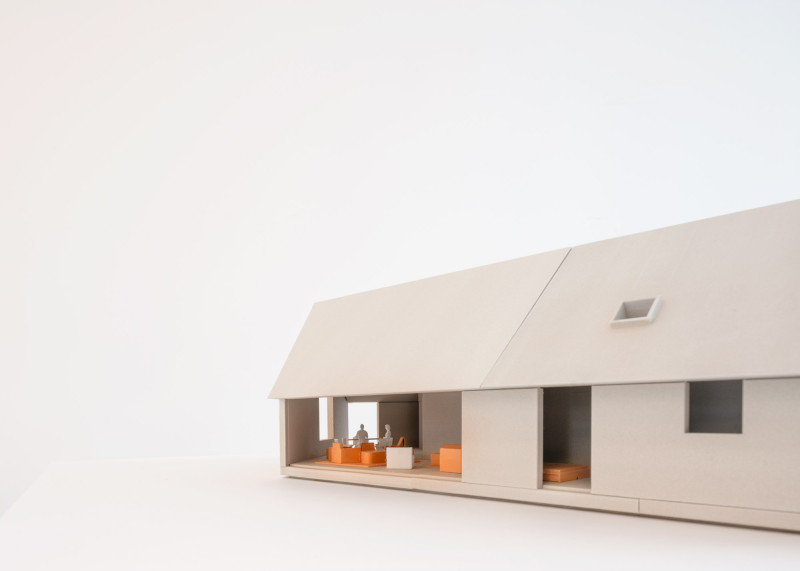
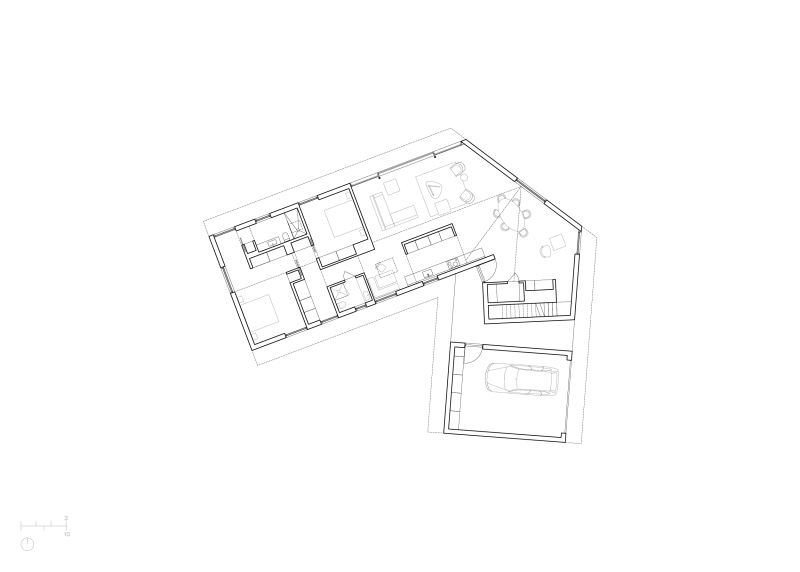
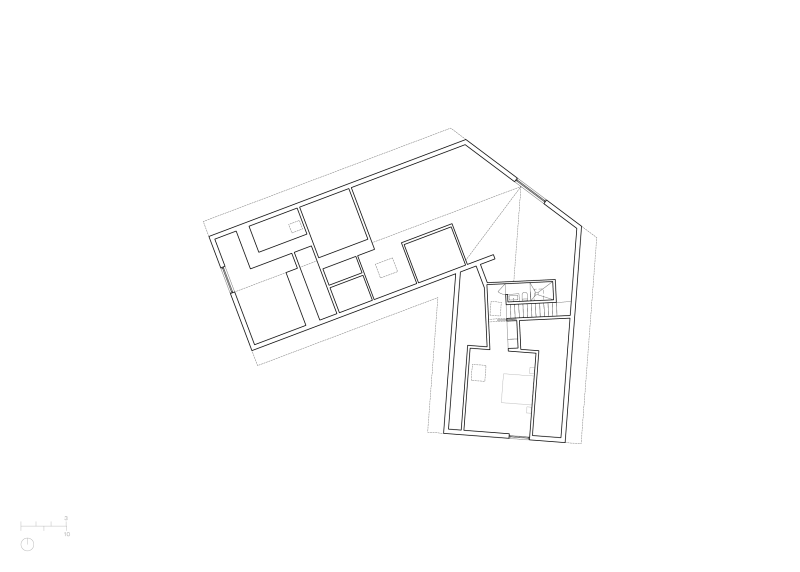
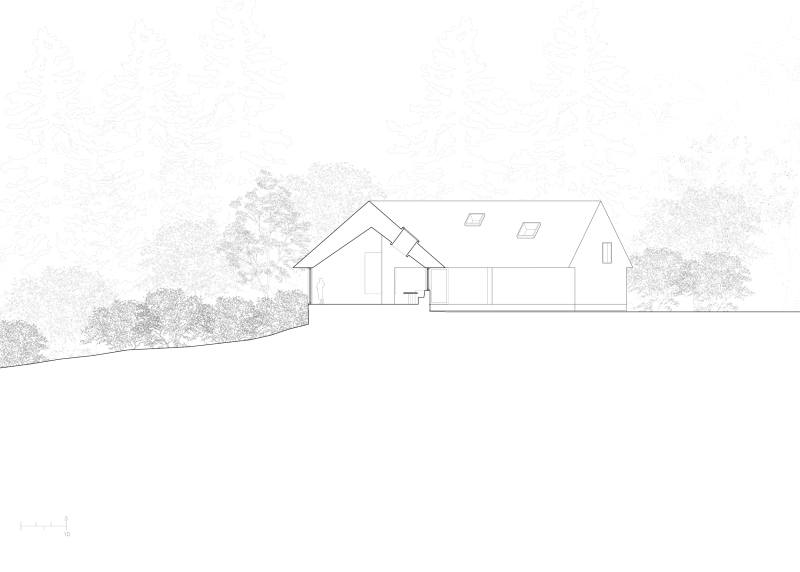
House NINE is a 2,500 sq. ft. [232 sq.m.] residence set along a rural road in the forested landscape of southern Berkshire County, Massachusetts. The project holds two identities at once: nested within the woods and quietly self-contained, yet spatially open and outward-looking. Rather than presenting itself as a singular object, the house is composed as a compact, precise arrangement—sophisticated in experience and plan logic, yet understated in presence.
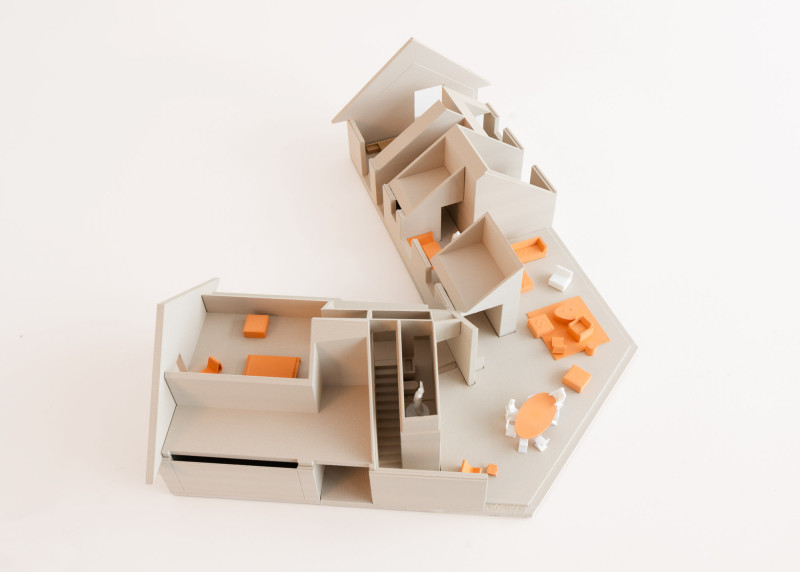
Two gabled volumes extend from a shared interior fulcrum—a central spatial moment that organizes arrival and daily life. From this convergence, the primary living areas expand outward and then compress into a sequence of nested, interlocking rooms that become progressively more private and intimate. The entry remains porous, drawing exterior space inward and integrating a detached garage as part of the approach. Within, a south-oriented wedge-shaped courtyard layers the interior sequence and softens the conventional sense of front and back, allowing the house to engage the forest on all sides with intimacy and immediacy.
House NINE is designed to meet or exceed Passive House performance benchmarks, prioritizing airtightness, thermal continuity, and healthy interior conditions. The building leverages prefabrication, including panelized assemblies and repeatable, cost-effective components that improve construction precision while supporting a clear reading of intersecting architectural forms.
As an all-electric house, heating and cooling are designed for efficiency and operational simplicity, paired with whole-house energy recovery ventilation to maintain stable, pre-conditioned fresh air and consistent comfort throughout the year.
Photography: EASTON COMBS (working models)
Consultants:
Certified Passive House Consultancy: NORTHEAST PROJECTS
Structural Engineer:
General Contractor: Star Contracting Company